Dust in your eyes, heat mirage dancing off the barrel, every crevice packed with grit. Then flip the scene: damp leaves brushing the stock, mud sucking at boots, faint rust already creeping on exposed metal. Environments don’t just test firearms—they dictate them. The smart shooter doesn’t grab the same setup for both. Choosing the right firearm parts and accessories means respecting what the terrain will throw at you.
Desert Realities: Sand, Heat, and Relentless Sun
Deserts punish gear in ways that feel almost personal. Temperatures soar past 120°F, baking polymer and metal alike. Sand finds its way into everything—rails, triggers, bolt carriers. One bad storm and that pristine rifle turns into a gritty mess. Ever watched a bolt seize mid-string because fine particles acted like lube-turned-abrasive? Happens more than anyone admits.
Optics suffer worst. High magnification scopes turn into telescopes of shimmering heat distortion. Low-power variable optics (LPVOs) or red dots win here—quick acquisition, less mirage sensitivity. Dust covers and sealed turrets aren’t optional; they’re survival. Coatings matter too. Flat dark earth or tan Cerakote blends, sure, but it also shrugs off UV fading better than black. Strange, but true: some desert shooters swear by magnesium handguards for weight savings and heat dissipation, even if they dent easier.
Muzzle devices? Flash hiders over brakes—less dust kick-up. Suppressors can cook barrels faster in extreme heat, so many stick to lighter cans or skip them entirely for long patrols.
Woodland Challenges: Moisture, Foliage, and Shadows
Flip to the trees. Humidity sits at 90%, rain comes sudden and hard, mud cakes every surface. Corrosion is the silent killer here—steel rusts overnight if neglected. Foliage snags slings, branches catch protruding controls. Light filters through leaves in weird patterns; shadows hide threats until they’re close.
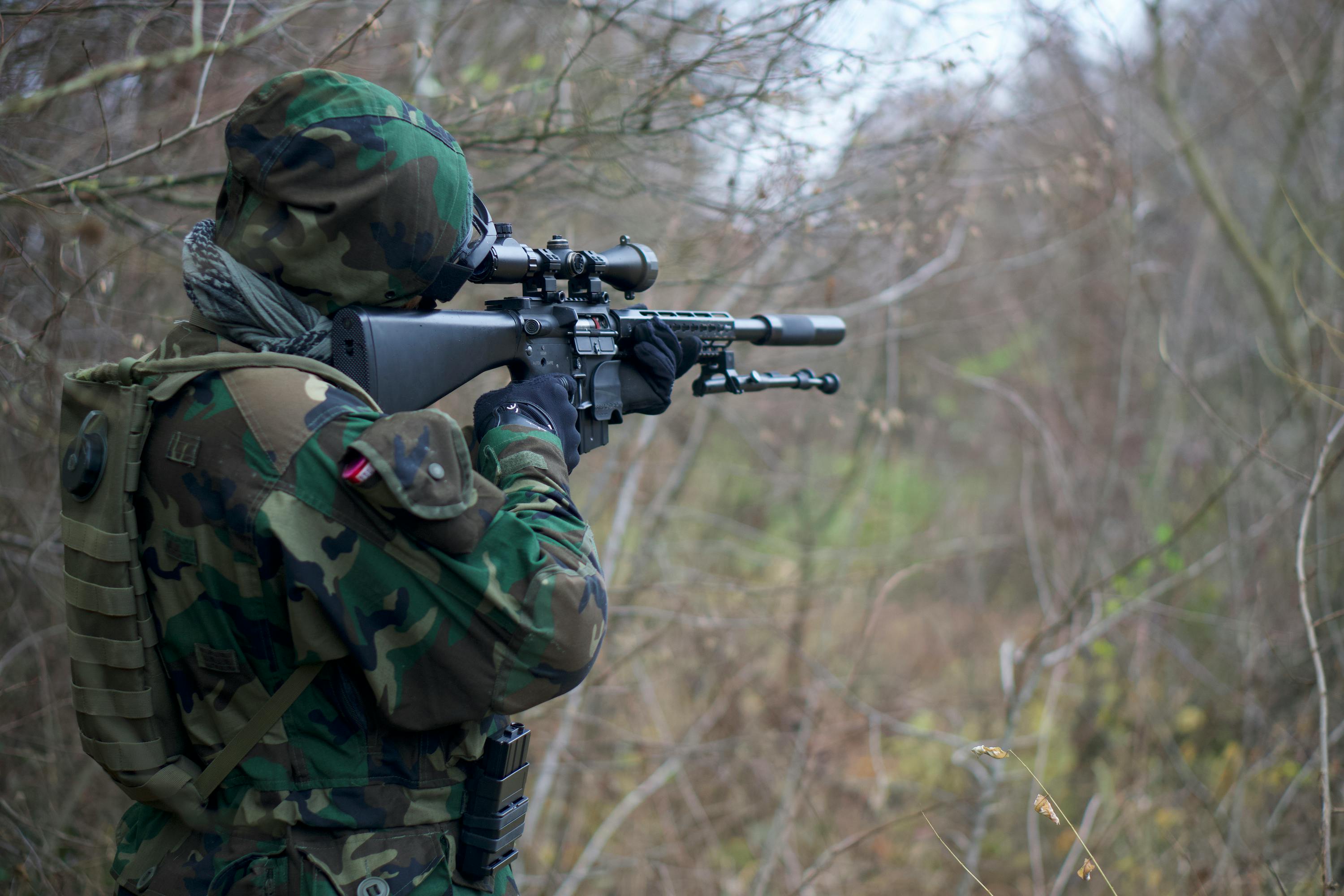
Camo patterns shine. Woodland digital or MultiCam blends where tan would scream. Textured grips—rubberized, stippled—keep hands from slipping when wet. Handguards with aggressive venting? Not ideal; they collect debris. Tighter, enclosed designs or KeyMod/M-LOK covers reduce snags. Stocks with adjustable cheek risers help when shooting prone over uneven ground or through brush.
Optics shift too. Illuminated reticles cut through low light and fog. Magnification creeps up—4-16x or fixed 4x—because engagements stretch farther under canopy. Suppressors pair well; they cut noise in echo-heavy woods, and the extra length balances better for sling carry.
Handguards, Grips, and Controls: Where Choices Diverge
Desert demands airflow to fight heat. Skeletonized or vented handguards bleed temperature fast, keep fingers from blistering. But in woodland, those vents turn into mud traps. Solid, wrap-around designs or wrap tape around them instead. Grips follow suit—desert favors slim, hard polymer to avoid sweat slippage; woods want tacky, oversized for gloved, wet hands.
Controls—ambi safeties, oversized mag releases—stay consistent, but placement matters. Desert rigs often run taller sights for co-witness over heat mirage; woodland prefers lower 1/3 optics to keep heads down in cover.
Slings and Carry: Mobility vs. Stability
Desert mobility rules. Single-point or convertible slings let shooters drop the rifle fast, sprint across open ground, or transition to sidearm. Woodland favors two-point slings—stable carry through thick brush, quick shouldering without swinging. Quick-detach mounts save headaches when branches snag.
Hypothetical: a shooter crossing open sand needs to run, drop, and shoot instantly—single-point shines. Same person in dense forest, weaving through trees? Two-point keeps the rifle snug, ready, without slapping against thighs.
Coatings and Durability: Long-Term Survival
Finish is more than aesthetics. Desert calls for UV-resistant, low-reflectivity coatings—Cerakote in desert tones or nitride treatments that hold up to abrasion. Woodland demands corrosion resistance—hard chrome, DLC, or high-end Cerakote in green/brown patterns. Some go overboard with tape or paint for quick field camo, but factory-applied lasts longer.
Still, rules exist for a reason. Cheap finishes flake in heat or bubble in moisture. Quality gun accessories—from reputable makers—often include environmental testing data. Worth the extra.
Wrapping It Up
Desert and woodland aren’t interchangeable. One demands heat management, dust sealing, and speed; the other corrosion resistance, grip security, and concealment. Match the gear to the ground, or pay the price in malfunctions, fatigue, or visibility. The rifle that thrives in dunes often struggles in timber, and vice versa. Thoughtful choices turn good setups into ones that actually perform when it counts.
Comments
Post a Comment